Inventory Control: FIFO and FEFO Strategies for Optimal Stock Rotation
Written by The TCE Logiplus team - Logistics operations, Chitila Logistic Park·Published on ·15 min read
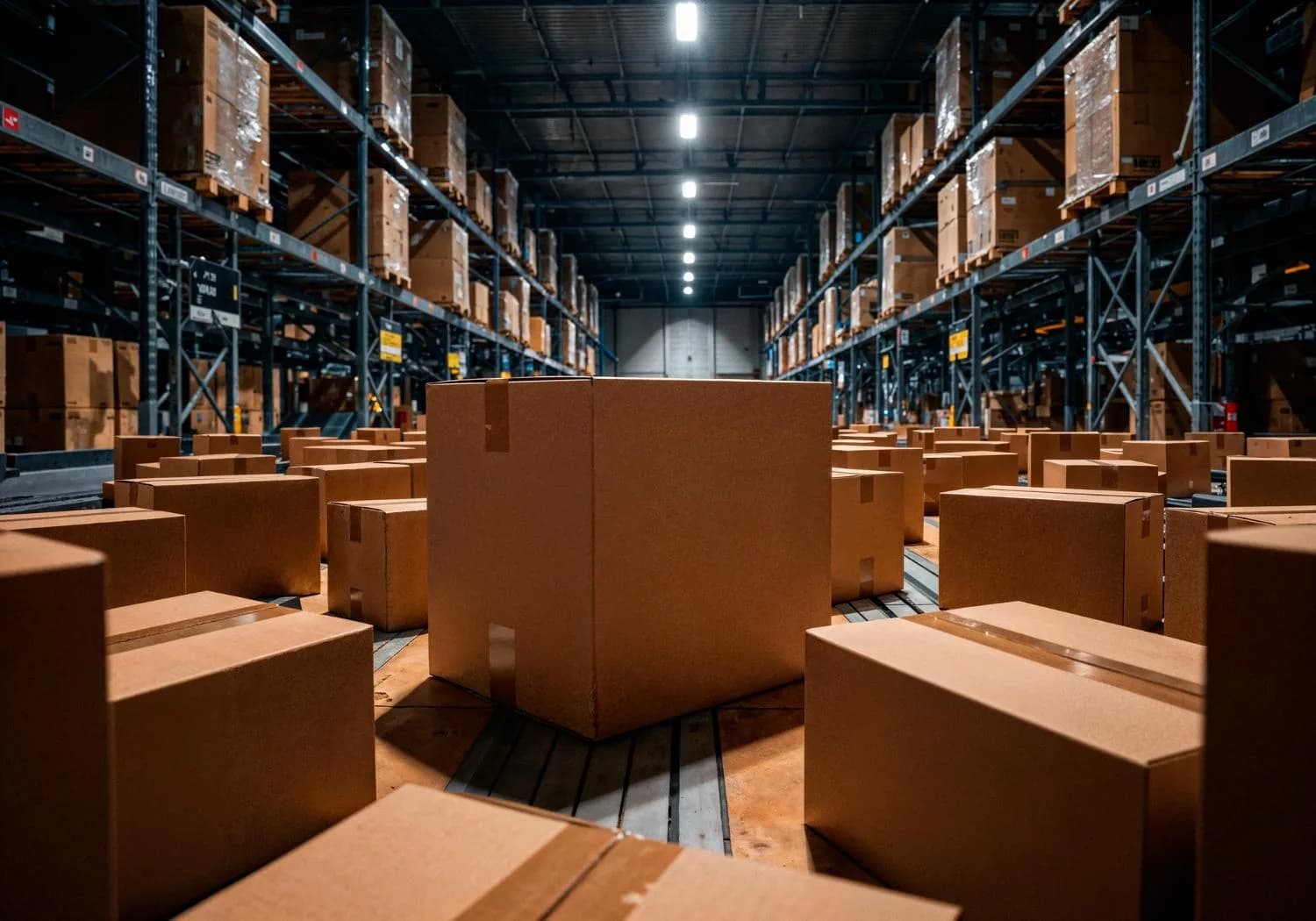
Photo: magnific.com
A warehouse can have sufficient stock and still ship the wrong batch. Newly received goods move to the front, older products remain at the back, and an unnoticed expiry date can change the value of the entire order.
The problem is not solved simply by putting a written rule on the wall. FIFO and FEFO work when receiving, labeling, put-away, picking, and delivery documents communicate the same information, without different interpretations from one shift to another.
This guide explains the difference between FIFO and FEFO, the situations in which each method makes sense, and the steps through which stock rotation can be connected to warehouse operations.
Contents+
Quick guide: inventory control using FIFO and FEFO
Situation
Direct answer
What does FIFO mean?
The first batch received is prepared first for outbound.
What does FEFO mean?
The batch with the nearest expiry date leaves first.
Does FEFO always replace FIFO?
No. It depends on whether expiry dates apply.
Where does rotation start?
At receiving, by checking the batch and date.
What supports rotation?
Labeling, clear locations, scanning, and consistent procedures.
What should you measure monthly?
Stock age, picking exceptions, and batches approaching expiry.
How FIFO Works in Inventory Control Without Picking Bottlenecks
FIFO means “first in, first out.” The rule seems simple: the batch received earliest should be the first available for delivery or consumption. In practice, the sequence breaks down when goods are not put away consistently, labels are not visible, or the operator selects the product based on proximity rather than age.
In a warehouse where the same product is received on several different days, the item code is not enough. You need the batch, receiving date, quantity, and location. Otherwise, the system may show the correct quantity in stock but still be unable to answer the question that matters: which units should leave first?
What the FIFO method means for goods without an expiry date
FIFO is suitable for products that can become outdated, lose usefulness, or become difficult to sell if they remain in storage too long. Examples include spare parts, seasonal items, printed packaging, and products with changing models.
The method does not necessarily mean that racking must be loaded from only one direction. You can work with dedicated locations, pallets identified by batch, or a system-suggested picking rule. What matters is that the physical flow and the digital information tell the same story.
There is also a common source of confusion. FIFO used in a warehouse describes the order in which goods physically leave. FIFO used in accounting may describe an inventory cost valuation method. The two concepts may support each other, but they are not identical.
Where FIFO bottlenecks occur and how to recognize them
A bottleneck occurs when older goods are difficult to access while newer goods are within easy reach. The operator may receive the correct recommendation, but handling time becomes too long. In a busy warehouse, delivery pressure may push the team to choose the easiest option rather than the correct batch.
Situations that may indicate incorrect FIFO application include:
older batches moved between locations without an update;
pallets with labels facing inward;
orders picked from a location different from the one suggested;
differences between the receiving date and the actual dispatch sequence;
older products found during inventory counts even though newer stock exists.
These problems do not automatically indicate an operator error. Sometimes the cause is the location design itself. If following FIFO constantly requires additional handling, the location configuration and the way the picking flow is organized should be reviewed.
How FIFO connects receiving with picking and dispatch
FIFO starts when the goods enter the warehouse. During goods receiving, each item must be checked quantitatively and qualitatively, then associated with a location and the correct identifier. An error at this stage carries through into inventory, picking, and delivery documents.
The next step is put-away. Older goods must remain accessible. Depending on the product, this may mean a picking location separate from reserve stock or a racking system that allows loading from one side and retrieval from the other.
At outbound, the operator must receive a clear instruction, not a general rule that leaves room for assumptions. Scanning the code, confirming the batch, and checking the quantity validate the operation and reduce the risk of selecting the wrong product or batch.
When FEFO Changes the Order of Stock Rotation
FEFO means “first expired, first out.” Unlike FIFO, the method does not ask which batch arrived first, but which batch has the nearest expiry date. A batch received yesterday may be prepared before one received last week if its expiry date is closer.
This difference matters for food, pharmaceuticals, cosmetics, supplements, chemicals, and any item whose shelf life is tied to the batch. FIFO can be a starting point, but the expiry date becomes the main criterion when there is a risk that the product can no longer be used or delivered.
When the expiry date takes priority over the receiving date
Imagine two batches of the same product. The first arrives on Monday and expires in six months. The second arrives on Friday and expires in two months. FIFO would indicate the first batch. FEFO indicates the second.
The difference is not merely one of terminology. It is an operational decision that protects stock usage before shelf life becomes a problem. In a European guide for the distribution of medicinal products, rotation according to the FEFO principle is stated as a rule, and exceptions must be documented (European Commission, guide accessed in 2026). For other categories of goods, the requirements should be checked separately.
FEFO requires the date to be read correctly and retained in the system. A label containing only the item code is not enough. The batch and expiry date must be visible during receiving, put-away, and picking.
How labels support FEFO application
A FEFO label should help the operator make a quick decision. Depending on the flow, it may include the product code, batch, receiving date, expiry date, quantity, and location. The format should be the same throughout all warehouse areas.
Labeling does not end when the label is printed. It should be checked in several situations:
when goods enter a new location;
when a pallet is opened and split;
when quantity is transferred between locations;
when a batch is blocked or released;
when the product enters the order preparation area.
A correct label placed where it is difficult to see does not solve the problem. Likewise, a system that knows the expiry date but does not display it in the picking task leaves the final decision to the operator.
What to do when FEFO cannot be applied automatically
Not every flow requires a complex management system from the outset. For low volumes, rotation can be managed through batch records, clearly defined areas, and periodic expiry-date checks. As the number of items and order frequency increase, purely manual control becomes more difficult to manage.
A study on FEFO implementation in perishable food supply chains identifies storage-management problems as one of the main barriers to applying the method (Kandasamy et al., study accessed in 2026). In other words, choosing FEFO on paper is not enough. Locations, labels, and operational discipline must make it possible to follow the rule.
At TCE Logiplus, rack storage can support organization by location, category, and batch when the client’s flow requires this separation. The exact rule should be established according to the type of goods, shelf life, quantity, and delivery method.
FIFO or FEFO: choosing the method based on the type of goods and shelf life
The choice between FIFO and FEFO depends on the criterion that should determine the order in which goods leave the warehouse. For products without an expiry date, the receiving date may be relevant, while for products with an expiry date, priority is determined by shelf life.
In many warehouses, the two methods work together. FIFO can organize the general stock, while FEFO applies to batches with expiry dates. This combination is more realistic than trying to impose a single rule on every product.
Which method to choose for each stock category
Method
Criterion
Suitable for
Main risk
FIFO
Receiving date
Seasonal items, parts, and products without an expiry date
A batch nearing expiry may be left behind
FEFO
Expiry date
Perishable products and items with an expiry date
Expiry dates may be entered incorrectly
FIFO plus FEFO
Expiry date, then receiving date
Mixed stocks with different batches and dates
The rules must be clearly documented
For a category with multiple batches, start by checking whether all products follow the same shelf-life rule. If the dates are identical or close, FIFO can determine the sequence. If the dates differ significantly, FEFO should take priority.
Why the FIFO method should not be confused with the selling price
An example from a Forocoches discussion shows how easily the physical order of goods can be mixed up with accounting valuation. Iacocca argues that the selling price is determined by the market, not simply by the price at which the goods entered stock, and that the valuation method can change the calculated accounting profit (Iacocca, Forocoches, 7 June, https://forocoches.com/foro/showthread.php?t=241932).
The observation is self-reported and comes from an educational discussion, not a study. Even so, it raises a useful practical issue: the warehouse team needs to know which rule it applies physically, while the finance department needs to know which method it uses for accounting records.
When these two levels are mixed together, unnecessary discussions arise. The operator is talking about which pallet should be taken out first, while the accountant is talking about which cost enters the calculation. Both may be correct, but they are answering different questions.
When it makes sense to use a mixed rule
A mixed rule works when the portfolio contains products with different risk levels. You may have items without expiry dates, products tracked by batch, and items that must be tracked by shelf life. Each group receives its own outbound logic rather than an exception invented for every order.
A simple model can look like this:
for items without an expiry date, apply FIFO based on the receiving date;
for products with an expiry date, apply FEFO based on the expiry date;
for blocked batches, stop picking regardless of age;
for approved exceptions, keep the reason in the system and in the internal documentation.
In a video about the FIFO, FEFO, and LIFO logistics principles, a commenter identified as User1 says that they use FIFO in a grocery store to prevent products from spoiling. Another commenter, User2, states that FEFO helped reduce expired products in a pharmacy (User1 and User2, YouTube, 28 and 29 December, https://www.youtube.com/watch?v=3GZ8qWYyTwI). These are individual experiences, not clinical data or industry statistics, but they illustrate the difference between the two rules.
How Stock Rotation Is Applied, from Receiving to Dispatch
Photo source: magnific.com
Stock rotation becomes consistent when each stage passes the same identity of the goods to the next one. Receiving confirms what came in. Put-away shows where it is. Picking decides what goes out. Packing and documentation preserve the link through to dispatch.
If one of the stages operates separately, the system may become correct only on paper. For example, a batch received with the correct expiry date may be put away in the wrong location, leaving the picking operator unable to apply FEFO without an additional check.
Step one: recording data when goods are received
At receiving, the product, quantity, batch, receiving date, and expiry date, where applicable, are checked. The data in the supplier documents must be matched with the physical goods before they are put away into stock.
A correct receiving flow may include:
checking the quantity and packaging;
identifying the batch and expiry date;
recording the data in the system;
printing or confirming the label;
allocating the appropriate location.
A discrepancy should be dealt with before the goods enter available stock. If an item is recorded without a batch or with an incorrect date, the problem will surface later, when correction takes time and may block an order.
Step two: organizing stock and the picking area
The picking area must allow access to the batch that should leave first. Reserve stock may remain in the same warehouse, but the locations and replenishment rules must be clear.
For FIFO, the order of entry matters. For FEFO, the order of expiry dates matters. For both methods, clear location organization makes it easier to follow the picking sequence. If the goods that should be prepared first are blocked by a pallet received later, additional handling is required and order-preparation time increases.
Depending on the flow, you may need racking, floor locations, access aisles, or areas for blocked stock. There is no single configuration that suits every product. Packaging shape, order frequency, and quantity per batch change the solution.
Step three: linking picking with packing and documentation
Picking does not end when the product reaches the preparation table. The selected batch must remain identifiable after packing. Here, packing and labeling can keep the data needed for order verification visible.
A final check can confirm:
the product code;
the prepared quantity;
the batch and expiry date, when required;
the integrity of the packaging;
the order destination.
Delivery documents must match what physically leaves the warehouse. In a properly organized flow, delivery documents support order verification and reduce uncertainty between the warehouse, carrier, and client.
In an outsourced model, this continuity is one of the differences between simply storing goods and managing a logistics flow. It is not enough to know how many units exist. You need to be able to explain where they are, which batch they come from, and why they were selected for dispatch.
How to Measure Inventory Control Under FIFO and FEFO
A procedure is not validated merely by existing; it is validated by the results it produces. For FIFO and FEFO, measurement should show whether goods leave in the established order, whether batches remain traceable, and whether exceptions are resolved before they become losses.
You do not need dozens of indicators. A few measurements tracked consistently can show where the flow breaks down. The important point is for each indicator to have a clear source and an associated action.
Indicators for stock age and expiry
Indicator
What it shows
Possible action
Stock age
How long batches remain in the warehouse
Review locations and picking frequency
Batches approaching expiry
Exposure to expiry risk
Prioritize eligible orders and notify the client
FIFO or FEFO exceptions
How often the rule is broken
Check the cause, not only the operator
Inventory discrepancies
Quality of inventory records
Control transfers and adjustments
Orders requiring rework
Product, batch, or quantity errors
Add a verification step before dispatch
A single indicator can be misleading. For example, a low number of expired products does not necessarily mean that FEFO is working well. It may also mean that short-dated goods are no longer accepted by customers or are withdrawn before appearing in the report.
How to verify compliance with the rule through an internal audit
Periodically select a few items and trace the route backwards: from the dispatched order to the original location and receiving. Check whether the batch prepared was actually the one that should have left first.
A useful check follows four questions:
are the receiving or expiry dates correct?
does the system location match the physical location?
did the operator receive an unambiguous picking task?
does the delivery document confirm the same goods?
If the answer is “no” to any of these questions, do not correct only the order being checked. Look for similar operations that may have the same problem. An isolated non-conformity is sometimes the first sign of an unclear rule.
When the WMS becomes part of inventory control
A WMS can suggest the correct location and batch, retain movement history, and flag exceptions. However, it cannot repair an incorrectly entered receipt or a label that does not match the physical product.
Technology helps most when the procedure is already clear. Before automation, define what FIFO means for each category, when FEFO takes priority, who approves an exception, and what happens to blocked goods.
For a company that outsources storage, picking, and dispatch, analyzing the complete flow is more useful than choosing a single service. TCE Logiplus logistics services can be evaluated according to receiving, storage, order preparation, packing, and the reporting required for the client’s operation.
Inventory Control Ends with a Documented Decision
The most expensive mistake is not always an expired product. Sometimes it is the lack of a clear explanation of how the wrong goods reached dispatch. Without traceability, every incident becomes a discussion based on assumptions.
FIFO and FEFO are not formulas applied identically in every warehouse. They are decision rules. The receiving date may be the right criterion for an item without an expiry date, while the expiry date can completely change the order for a perishable product.
A good process does not try to eliminate every exception. It makes exceptions visible, approves them when there is a reason, and keeps them in the operational history. That is where real inventory control begins, not at the end of the stock count.
FIFO used to prevent product spoilage. User1 states that they use FIFO in a grocery store to prevent goods from deteriorating. This is an individual experience, not an industry statistic. YouTube, 28 December, https://www.youtube.com/watch?v=3GZ8qWYyTwI
FEFO and reducing expired products. User2 says that using FEFO helped reduce expired items in a pharmacy. The observation is self-reported and should be distinguished from research findings. YouTube, 29 December, https://www.youtube.com/watch?v=3GZ8qWYyTwI
Confusion between FIFO and weighted average price. XaviS68 describes the difficulty of applying FIFO in an exercise involving opening stock, purchases, and successive sales. The discussion shows how easily FIFO can be confused with another calculation method. Forocoches, 25 March, https://forocoches.com/foro/showthread.php?t=2672371&page=2
Separating the selling price from inventory valuation. Iacocca points out that the selling price is not automatically determined by the purchase cost and discusses the difference between accounting valuation and commercial results. Forocoches, 7 June, https://forocoches.com/foro/showthread.php?t=241932
About the author
The TCE Logiplus team - Logistics operations, Chitila Logistic Park
The team that runs the TCE Logiplus warehouse at Chitila Logistic Park: receiving, storage, picking, packing and reporting, managed through a WMS with FIFO and FEFO rules.
Two phrases are frequently encountered in food storage: “Class A warehouse” and “sanitary-veterinary authorized warehouse.” The two do not describe the same thing. Class A refers to the technical…
The goods receipt and discrepancy report, known in Romanian as the NIR, is the financial-accounting document used to record the receipt of goods, their entry into inventory management and, where…
From a transport company in the Bucharest area to an integrated logistics group: how TCE Holding came to run, through TCE Logiplus, the 7,300 sqm warehouse in Chitila.