What a Class A Warehouse Means for Logistics and What Sanitary-Veterinary Authorization Entails
Written by The TCE Logiplus team - Logistics operations, Chitila Logistic Park·Published on ·13 min read
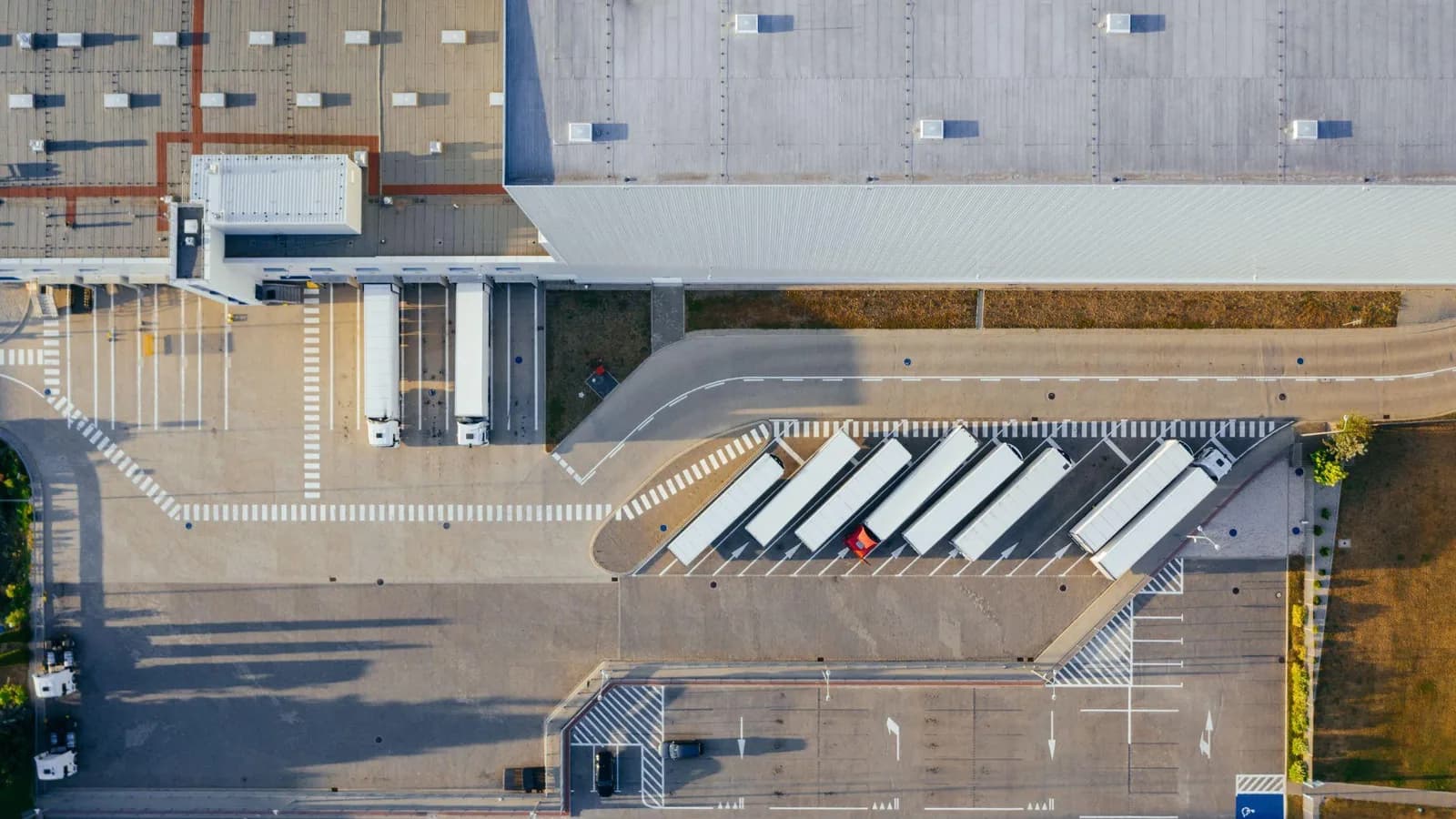
Photo: pexels.com
Two phrases are frequently encountered in food storage: “Class A warehouse” and “sanitary-veterinary authorized warehouse.” The two do not describe the same thing. Class A refers to the technical and operational characteristics of the logistics space, while sanitary-veterinary authorization concerns compliance with the requirements applicable to the authorized activities and product categories.
The distinction is particularly important for products with specific storage requirements or products originating from different sources. A warehouse may have modern infrastructure without being authorized for every product category, while sanitary-veterinary authorization does not automatically mean that the space qualifies as Class A.
The following sections present the differences between the two concepts, the requirements that may vary depending on the origin of the goods, and the elements relevant when evaluating a logistics warehouse.
Contents+
Quick guide: Class A warehouse and sanitary-veterinary authorization
Situation
Direct answer
What is Class A?
A market classification for logistics spaces with superior technical infrastructure.
Is it a legal category?
There is no single legal definition applicable to all warehouses in Romania.
What does the authorization confirm?
Compliance with the requirements applicable to food handling and storage.
What matters for non-EU goods?
Certificates, official controls, and traceability up to the point of import.
Is a modern building enough?
No. Infrastructure and authorization must be assessed separately.
What should you check before signing a contract?
The scope of the authorization, workflows, storage conditions, and operational documents.
What a Class A warehouse means in logistics practice
In practice, a Class A warehouse is a logistics space designed for efficient use, fast handling, and good control of goods. The classification is used in the industrial market and takes into account factors such as the year of construction, location, building quality, facilities, road access, and technical features.
However, there is no single legal definition that universally establishes what Class A means in Romania. The classification is more of a market convention, built on technical and operational criteria. This is also noted in CWE Industrial’s analysis of the differences between Class A, B, C, and D industrial spaces.
In industrial real estate practice, the characteristics considered when classifying a logistics space as Class A may include:
high clear height, allowing efficient use of pallet racking;
flat industrial flooring, resistant to loads and repeated equipment traffic;
loading and unloading docks adapted to transport vehicles;
fire detection and suppression systems, including sprinklers;
good truck access and sufficient maneuvering space;
monitoring, security, and IT systems for inventory management.
An example published by CWE Industrial indicates, for certain Class A warehouses, a 12-meter clear height, a floor load capacity of 5 tonnes per square meter, loading docks, LED lighting, and fire protection systems (CWE Industrial, 2024). These values should not be treated as mandatory thresholds for every space. They illustrate the type of specifications considered when evaluating a logistics building.
For a company storing food products, Class A is valuable only if the infrastructure supports the actual workflow. For food operations, the infrastructure must be assessed together with the way workflows are organized. Receiving, stock rotation, traceability, and operational documentation depend on the procedures applied, not only on the building’s technical characteristics.
In a modern logistics warehouse, the space should allow operations to be separated: receiving, inspection, put-away, picking, packing, and dispatch. This separation reduces bottlenecks and helps the team track each movement of goods more easily.
What Class A classification does not guarantee
The Class A label alone does not guarantee that a warehouse can receive any food product. It does not replace sanitary-veterinary authorization, hygiene procedures, the control plan, or verification of temperature conditions.
The distinction is simple. Class A classification and sanitary-veterinary authorization must be assessed separately. The former describes the technical and functional characteristics of the logistics space, while the authorization establishes the activities and product categories for which the facility meets the applicable requirements.
For example, a building may have modern loading docks, sprinklers, and high racking, yet lack the areas or procedures required for refrigerated products. It may have excellent flooring but no documented workflow for goods with a risk of cross-contamination.
Before signing a contract, it is worth requesting a clear presentation of the following elements:
the exact product category for which the warehouse is authorized;
the accepted temperature range and how it is monitored;
the areas available for food products, packaging, and non-compliant products;
the procedure applied at receiving and when a discrepancy is identified;
how batches, expiry dates, and documents are maintained;
the responsibility of each party in the event of non-compliance.
An authorized warehouse should not be confused with a facility that automatically accepts every type of product of animal origin. Meat, dairy products, fish, eggs, or composite products may have different requirements. Likewise, products of non-animal origin may be subject to different rules, especially if they are imported from countries outside the European Union.
The commercial phrase “products of animal and non-animal origin, originating from the EU and outside the EU” should therefore be read together with the exact scope of the authorization. The category, form of the product, temperature regime, and actual activity carried out in the warehouse all matter. A serious answer is not “we accept anything,” but “we accept these categories, under these conditions.”
This is where the detail that changes everything appears: storage is not identical for every type of goods. A pallet of ambient products and a pallet of refrigerated products may pass through the same receiving area, but they should not be treated as though they require the same conditions.
What sanitary-veterinary authorization for food products entails
Sanitary-veterinary and food safety authorization confirms that a facility may carry out certain activities under conditions established by the competent authority. For a warehouse, the assessment covers the space, workflows, hygiene, equipment, procedures, and documents used in operations.
The competent authority may request technical documentation, information about the activity, facility plans, and control procedures. Depending on the situation, an inspection may take place before the authorization or registration is issued. ANSVSA publishes information and forms for facilities handling products of animal and non-animal origin.
In the food sector, procedures based on HACCP principles are provided for in Article 5 of Regulation (EC) No 852/2004. They involve identifying hazards, establishing control points, monitoring them, and keeping records proportionate to the operator’s activity (European Commission, 2022).
In a warehouse, HACCP does not mean merely keeping a file in a cabinet. The procedure must be reflected in day-to-day activities:
checking the conditions in which the goods arrive;
checking packaging, batches, and expiry dates;
maintaining the temperature specified for the product;
preventing contact between incompatible categories;
cleaning and maintaining work areas;
recording and handling non-compliant products.
A HACCP training material published by UNIDO recommends that food storage areas allow effective maintenance, cleaning, and protection of products. The same source emphasizes contamination control, personal hygiene, water quality, lighting, ventilation, and separate storage of food and chemicals (UNIDO, 2007).
In practical terms, the authorization is not merely an administrative formality. It links the building to the way it is used. If the product range, temperature regime, or activities carried out change, the authorized status may need to be reassessed.
Not all food products carry the same risks. Storage of products of animal origin may involve requirements different from those applicable to cereals, beverages, canned goods, or other products of non-animal origin. This is precisely why verification must be carried out by category and activity, rather than based on a general presentation statement.
A good warehouse can explain clearly what happens when a pallet arrives damaged, when the temperature is outside the acceptable range, or when the documents do not match the goods. If the answer depends on improvisation by the operator on duty, the procedure is not clear enough.
How goods from the EU differ from goods from outside the EU
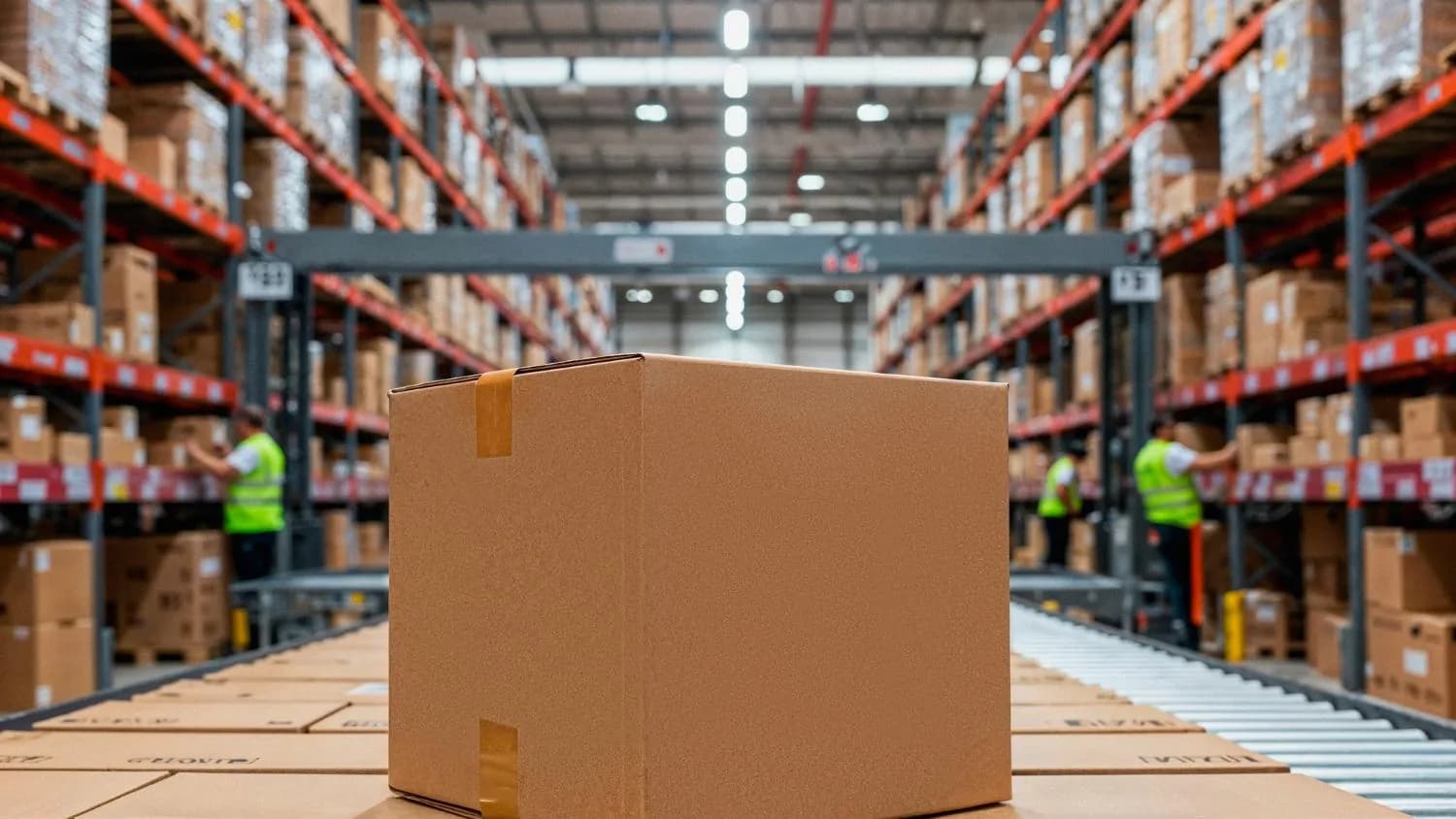
Photo source: magnific.com
The origin of the goods changes the documentation and the level of control. Products coming from another EU Member State move within a harmonized Community framework, but they must still be identifiable, accompanied by the applicable documents, and managed in accordance with product requirements.
For goods coming from countries outside the EU, the rules may be stricter. The European Commission states that products of animal origin may be imported only from countries and establishments authorized to export to the European Union, and certain consignments must be accompanied by official certificates.
Upon entry into the EU, documentary checks, identity checks, and physical checks may be carried out. Certain products of non-animal origin are also subject to intensified official controls depending on the identified risk. Not all non-EU goods follow the same route, and the requirements may depend on the product and the country of origin.
Element
EU origin
Non-EU origin
Movement framework
Harmonized rules within the Union
Import rules and controls upon entry into the EU
Traceability
The product’s origin and movement must be documented
Traceability from origin to the point of import
Certificates
Depend on the product type and workflow
Official certificates, when required by legislation
Controls
Checks within the EU supply chain
Documentary, identity, and physical checks, as applicable
A logistics operator does not replace the importer or the control authorities. Its role is to receive, identify, store, and dispatch the goods under the established conditions. For non-EU goods, the documentation must reach the warehouse in a form that allows the batch, origin, and product status to be verified.
In practice, the same racking area may hold products of different origins, but the management system must preserve the distinctions between them. When a batch is identified incorrectly, the problem is no longer just an inventory issue. It can affect delivery, product withdrawal, and the response to an inspection.
This is why receiving is the first point at which process quality should be checked. When goods are received, quantitative and qualitative checks, comparison with the supplier’s documents, and registration in the WMS must be linked in a single procedure.
How compliance appears in daily operations
Compliance is visible not only in the authorization, but also in the way the warehouse operates on a busy day. A truck arrives, staff unload the pallets, documents are checked, products are identified, and the goods reach the correct location. Each stage must leave a verifiable trail.
For food products, receiving may include checking packaging integrity, the batch, the expiry date, and transport conditions. For temperature-controlled products, maintaining the required temperature during transfer also matters. A delay at the loading dock can become relevant if the product no longer meets the required conditions.
After receiving, the goods must be placed in a known location. Racking provides better control over locations, palletization, and access, especially when inventory contains many batches or different expiry dates.
Stock rotation should be chosen according to the product and the company’s procedure. FIFO may be useful for products where the order of entry matters, while FEFO is preferable when the expiry date is the main criterion. Neither method works if the data in the system does not match the goods at the location.
Order preparation activities must also remain documented. During packing and labeling, checking the product, quantity, and label information can prevent errors that become visible only after delivery.
A discussion on Forocoches highlights an issue encountered when evaluating warehouse operations: the number of boxes moved does not always reflect the true difficulty of the work. User “ags” noted that a full pallet can generate many boxes moved, while picking and carefully building a pallet may require more work without an equally large apparent volume (ags, Forocoches, 29 December 2019, source: https://forocoches.com/foro/showthread.php?t=7628258).
The observation is also relevant to food products. A warehouse should not be evaluated only by handling speed. Accuracy, preservation of batch integrity, prevention of product mixing, and the quality of documentation also matter.
At the end of the workflow, the documents must actually match the order. The delivery documentation service may include generating delivery notes, AWBs, or CMR documents from the WMS, depending on the operation and the responsibilities established contractually.
Stage
What is checked
What remains recorded
Receiving
Quantity, packaging, batch, documents
Goods receipt in the system
Storage
Location, category, storage conditions
Inventory location and status
Preparation
Product, batch, quantity, label
Order allocated and verified
Dispatch
Documents and recipient
Goods leaving the warehouse
What to check before choosing an authorized warehouse
Before choosing a warehouse for products of animal or non-animal origin, start with your goods, not with the building’s general description. The product list, temperature regime, origin, delivery frequency, and number of batches determine the logistics capacity you need.
A practical check can begin with the following questions:
For which categories is the warehouse authorized? Ask for the exact wording and check whether it covers your products.
What temperature conditions are available? Ask how they are measured, how often they are recorded, and what happens in the event of a deviation.
How is receiving carried out? Check whether the goods, batches, quantities, and supplier documents are compared.
How are non-compliant products managed? There should be an area and a procedure for segregation, blocking, and decision-making.
How are the goods tracked? You need information on location, batch, inbound, outbound, and reports.
What documents do you receive upon delivery? Clarify in advance the delivery notes, AWBs, CMR, and each party’s responsibilities.
Public community experiences show why these questions are not merely bureaucratic. On Forocoches, user “primordium” was looking for a solution to load and transport stock located approximately 200 kilometers away. The responses highlighted that transport, handling, and packing are different activities that must be planned together (primordium, Forocoches, 12 April 2025, source: https://forocoches.com/foro/showthread.php?t=10312100).
Another example comes from a discussion about a warehouse inspected by the authorities in Kraków. User “kolejarz28” reported that storage non-compliances had been identified and that 16,000 bottles of water were being kept outdoors, exposed to contamination (kolejarz28, Wykop, 24 April 2026, source: https://wykop.pl/link/7933259/sanepid-w-magazynie-regiojet-w-krakowie-tysiace-produktow-do-utylizacji).
These accounts do not replace an official inspection and cannot be treated as statistics. They do, however, show where problems arise in practice: at the transfer between transport and warehousing, in product segregation, in storage conditions, and in the absence of a clear procedure.
When choosing a logistics partner, it also matters how easily the services can be integrated into a single workflow. Receiving, storage, packing, labeling, picking, and delivery documents should not be managed as separate islands.
For a complete workflow, you can also review the main TCE Logiplus page and then request a discussion about your products, estimated volumes, and operating conditions. A good offer should specify what is included in the service and what remains the client’s responsibility.
The most useful document is not always a presentation filled with figures. It is a clear description of the goods’ journey, from arrival through dispatch. That is where you can see whether the Class A warehouse and sanitary-veterinary authorization are supported by a process that can be verified.
The difference between handling and transport: User “primordium” looked for a company to take goods from warehouse shelves, load them, and transport them over a distance of approximately 200 kilometers. Forocoches, 12 April 2025. https://forocoches.com/foro/showthread.php?t=10312100
Measuring warehouse activity: User “ags” observed that the number of boxes moved does not always reflect the difficulty of picking and palletizing. Forocoches, 29 December 2019. https://forocoches.com/foro/showthread.php?t=7628258
The TCE Logiplus team - Logistics operations, Chitila Logistic Park
The team that runs the TCE Logiplus warehouse at Chitila Logistic Park: receiving, storage, picking, packing and reporting, managed through a WMS with FIFO and FEFO rules.
A warehouse can have sufficient stock and still ship the wrong batch. Newly received goods move to the front, older products remain at the back, and an unnoticed expiry date can change the value of…
The goods receipt and discrepancy report, known in Romanian as the NIR, is the financial-accounting document used to record the receipt of goods, their entry into inventory management and, where…
From a transport company in the Bucharest area to an integrated logistics group: how TCE Holding came to run, through TCE Logiplus, the 7,300 sqm warehouse in Chitila.